“The liberty of a democracy is not safe if the people tolerate the growth of private power to a point where it becomes stronger than the democratic state itself. That in its essence is fascism.” — Franklin D. Roosevelt
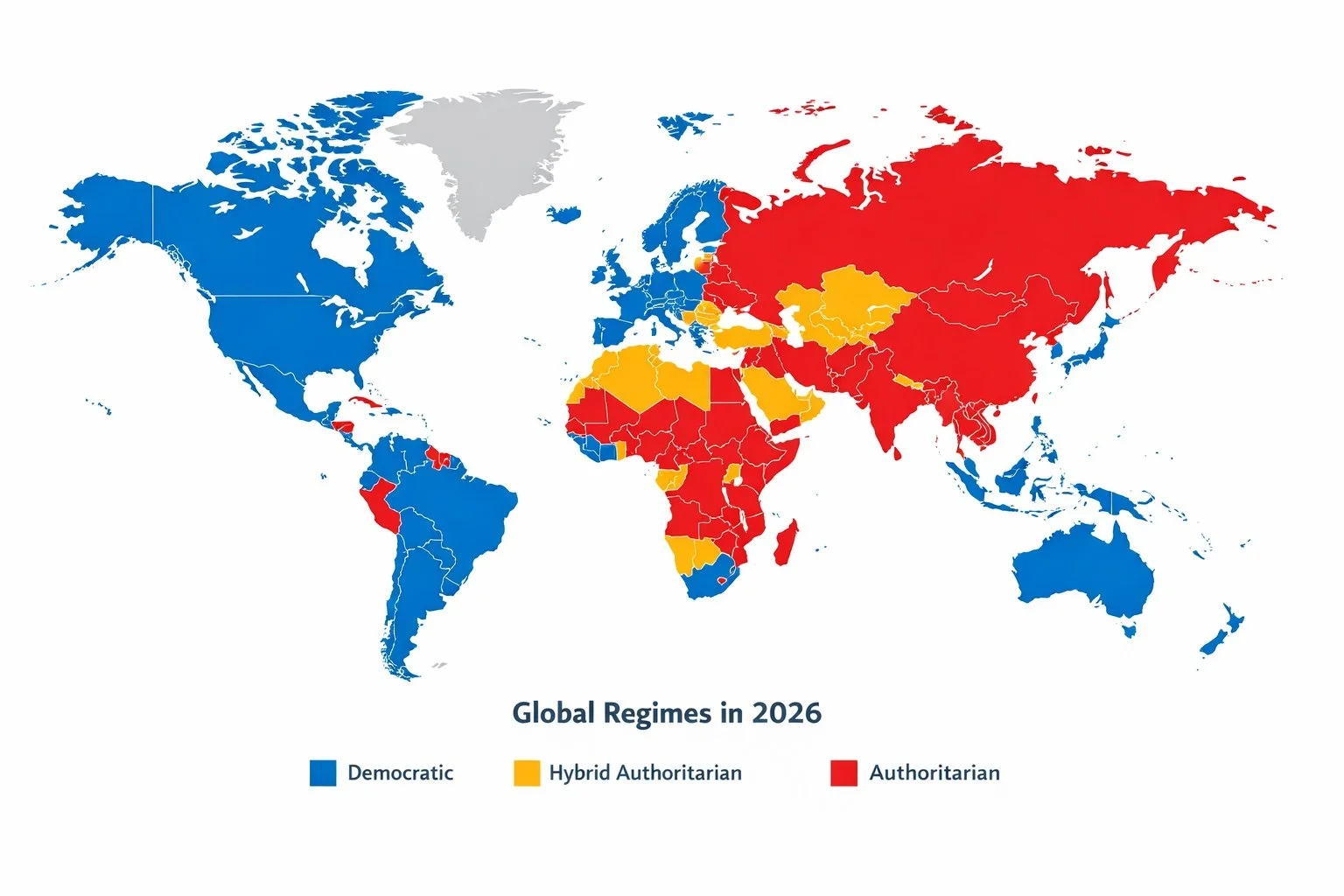
Understanding Governments
Authoritarian Regimes
Core idea: Power is concentrated in the hands of a single ruler or a small elite, with limited political freedoms.
Key features
Elections, if they exist, are tightly controlled and not meaningfully competitive
Opposition is restricted, harassed, or banned
Media is censored or state‑controlled
Civil liberties (speech, assembly, press) are limited
Rule of law is weak; the government often acts without institutional constraints
Examples of common authoritarian traits
One‑party dominance
Security forces used to suppress dissent
Limited transparency
Hybrid Authoritarian (Hybrid Regimes)
Core idea: A mix of democratic institutions and authoritarian practices. Sometimes called “competitive authoritarian” or “illiberal” regimes in political science.
Key features
Elections exist and may be competitive on paper, but the playing field is uneven
Opposition parties are allowed but disadvantaged through legal, financial, or media barriers
Media may be partly free but faces pressure, intimidation, or selective censorship
Institutions (courts, legislatures) formally exist but are often influenced by the ruling group
Civil liberties are partially protected but inconsistently enforced
Why it’s “hybrid”
It’s not fully authoritarian because some pluralism and competition remain
It’s not fully democratic because the ruling power uses state resources or legal tools to maintain dominance
Democratic Regimes
Core idea: Political power is distributed, accountable, and based on free and fair competition.
Key features
Free, fair, and competitive elections with real uncertainty about outcomes
Protection of civil liberties such as speech, press, assembly, and religion
Independent judiciary and rule of law
Checks and balances between branches of government
Open media environment with diverse viewpoints
Peaceful transfer of power
Democracy is not just elections It also requires:
Strong institutions
Protection of minority rights
Transparency and accountability



Their attention to detail and commitment to quality truly stood out. We’ve already recommended them to others.
—Former Customer